Hydroseeding Raleigh NC
Hydroseeding in Chatham County, NC
NC Lawnstar Hydroseeding serves Chatham County — Pittsboro, Siler City, Goldston, Bear Creek, Bynum and Moncure. Chatham wraps around Jordan Lake, which means the county runs the tightest watershed rules in our territory and erosion control is a bigger share of the work than anywhere else we go.
- Licensed & insured in North Carolina
- Free on-site measurement anywhere in Chatham County
- Tall fescue on lawns, with fast-establishing nurse crops on erosion work
Get a free estimate
Tell us where in Chatham County the property is and roughly how big. We’ll measure it and send a written price.
We only use your details to quote the job. No mailing lists.
Free on-site estimates throughout Chatham County.
(919) 555-0148Recent work in Chatham County
Every photo below is a Chatham County property.
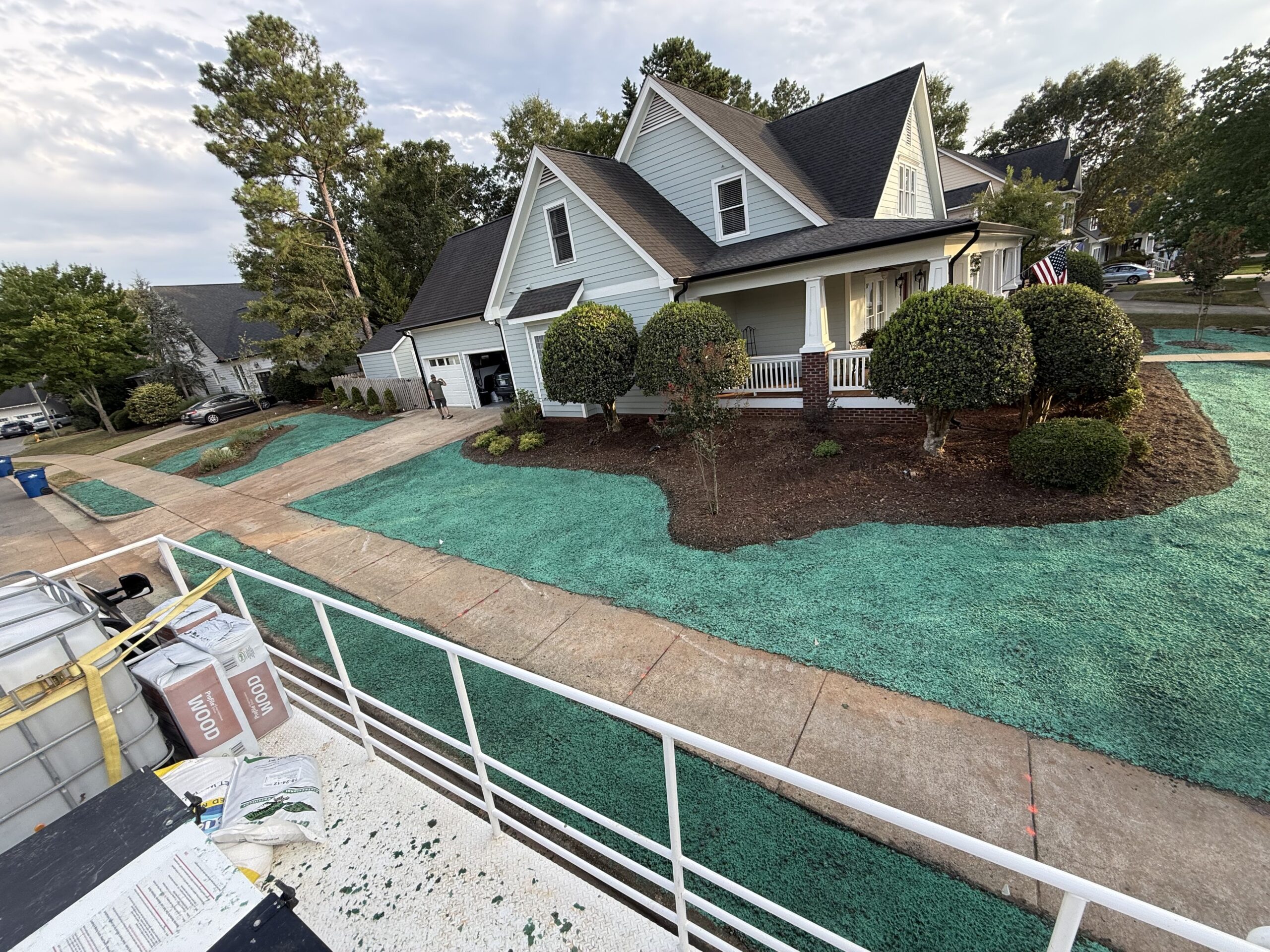
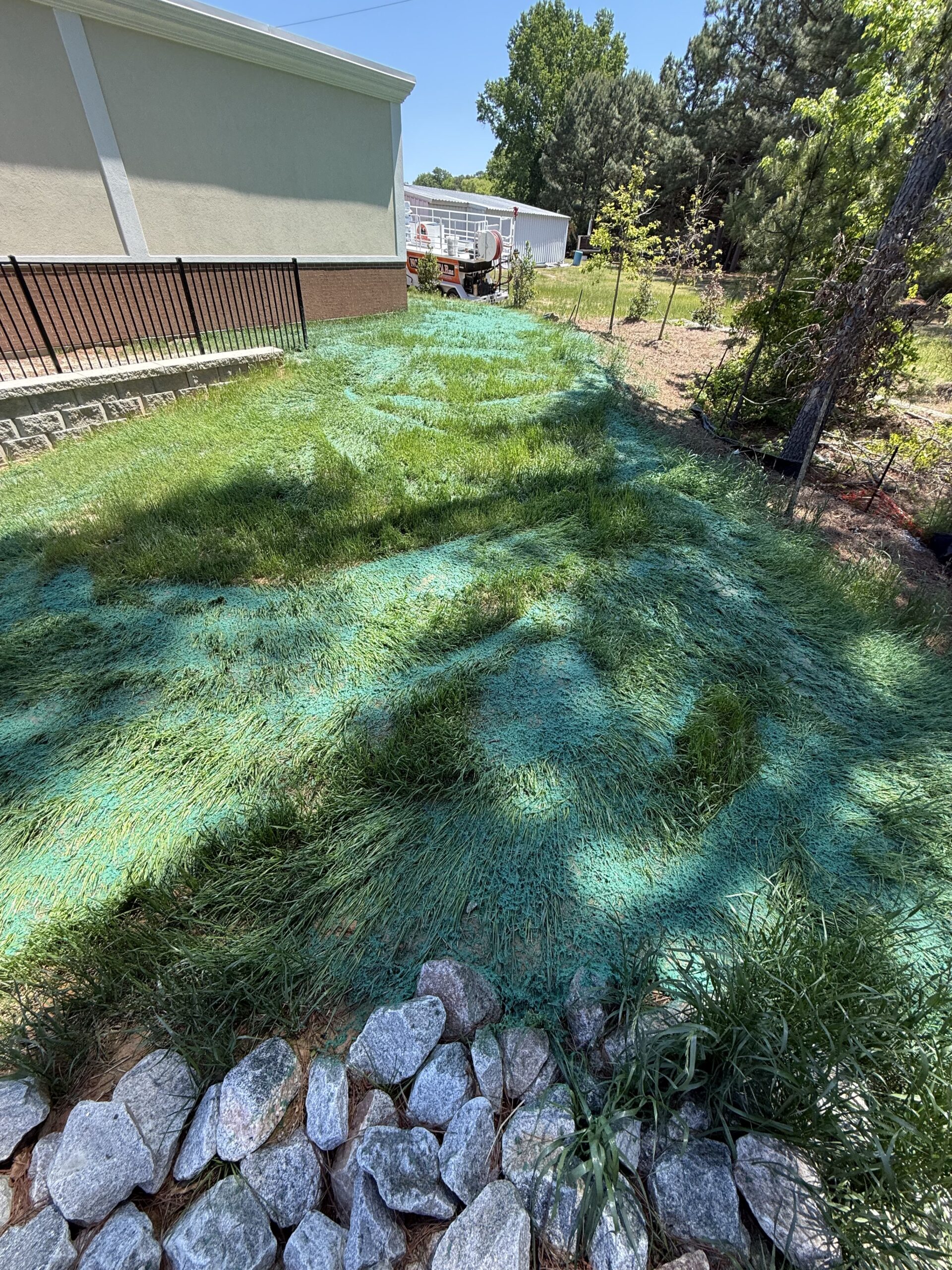
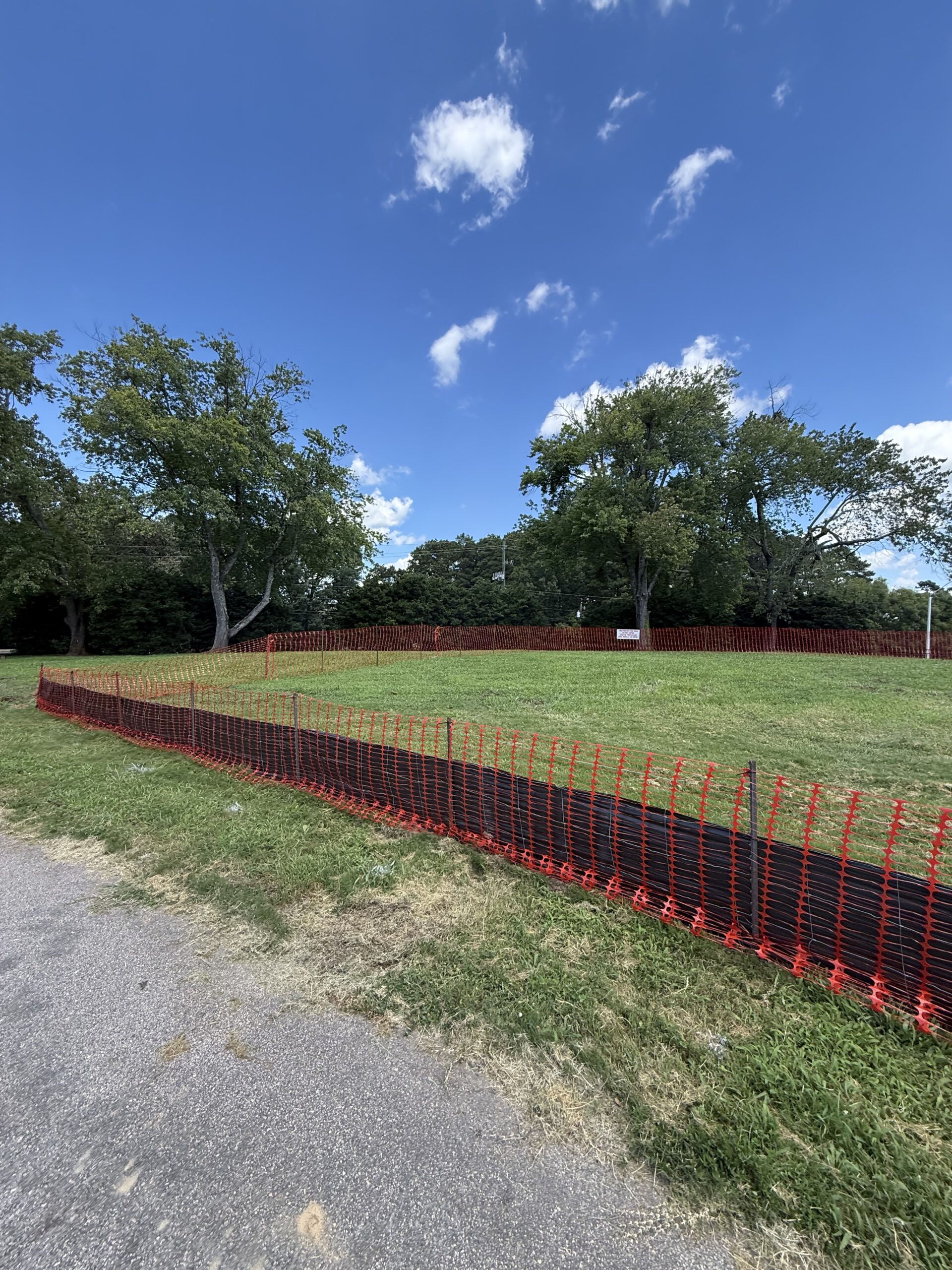
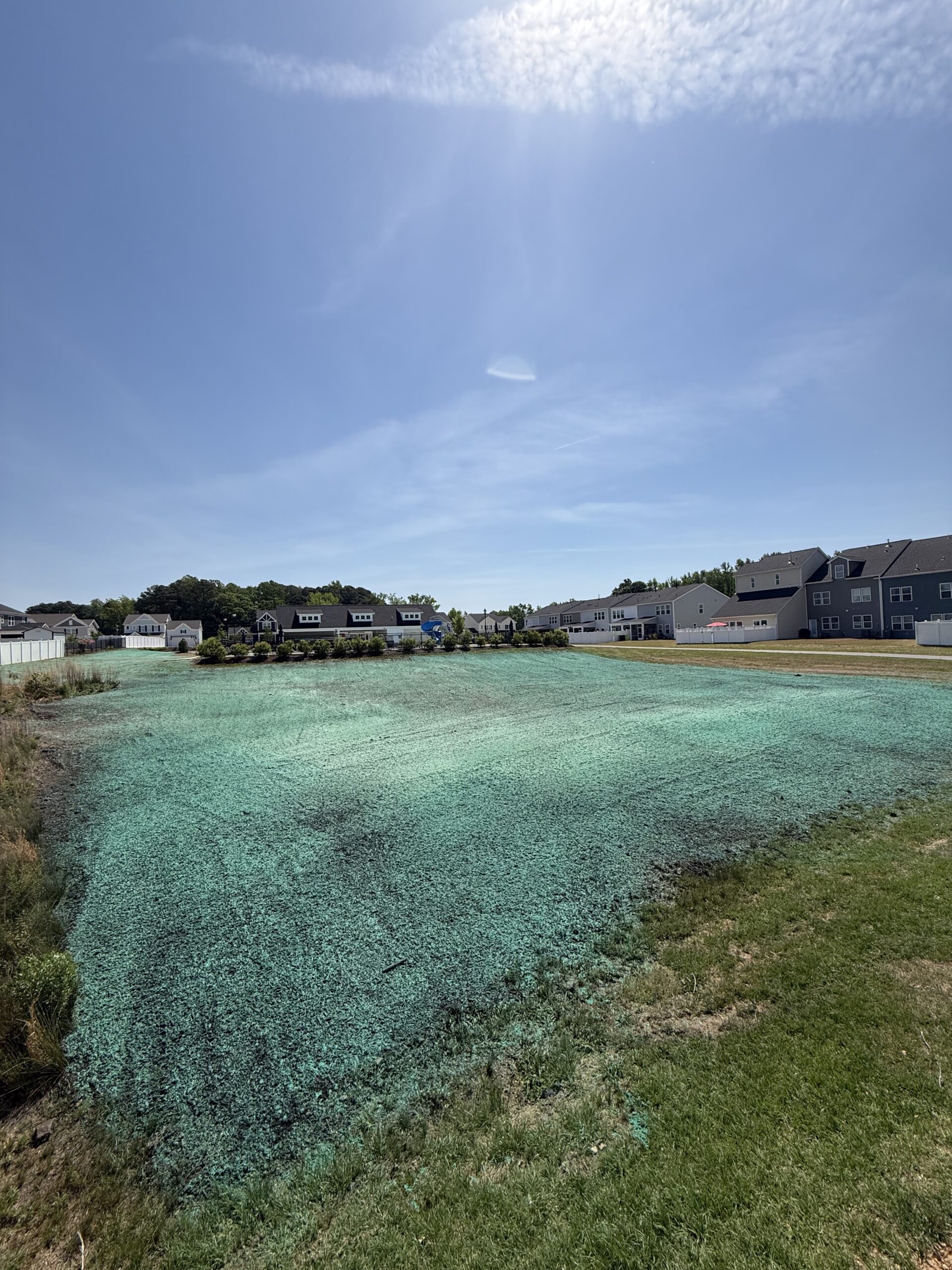
Living inside the Jordan Lake watershed
Chatham contains Jordan Lake, and that single fact shapes the work. The Jordan Lake nutrient rules apply across the county, land disturbance near the reservoir is watched closely, and bare ground on a slope draining toward the lake is a genuine problem rather than a cosmetic one. Getting permanent cover established quickly is the whole job.
The soil is Carolina Slate Belt on the western side — Georgeville and Badin silt loams — shifting toward Triassic material near Moncure and the Deep River. The terrain is steeper than most of the Triangle, and a lot of Chatham property is on well and septic, which means we do a fair amount of seeding over new drain fields where you cannot use heavy equipment.
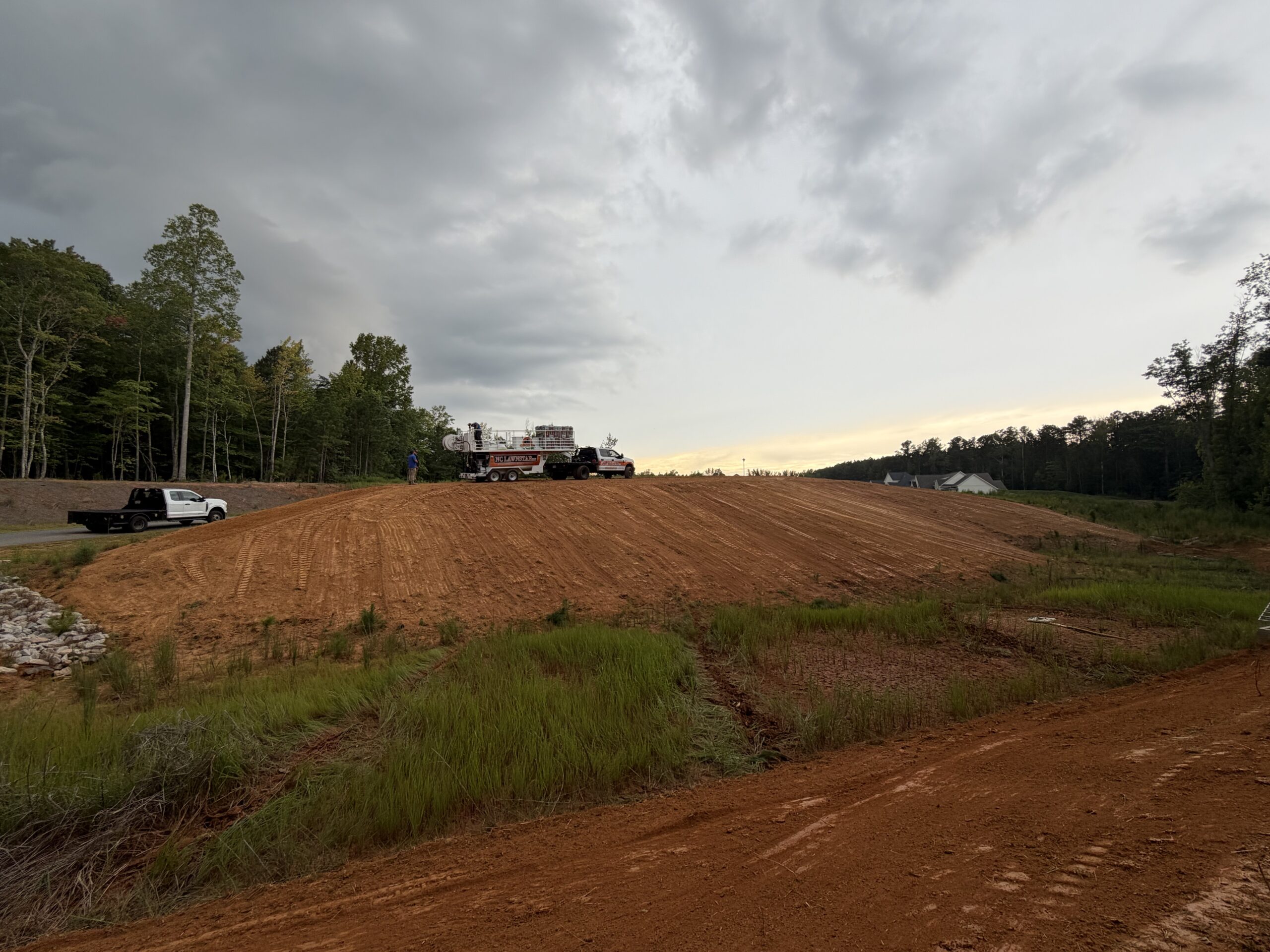
Bare ground to established lawn
Drag the slider to see a typical Chatham County property before hydroseeding and after one growing season.
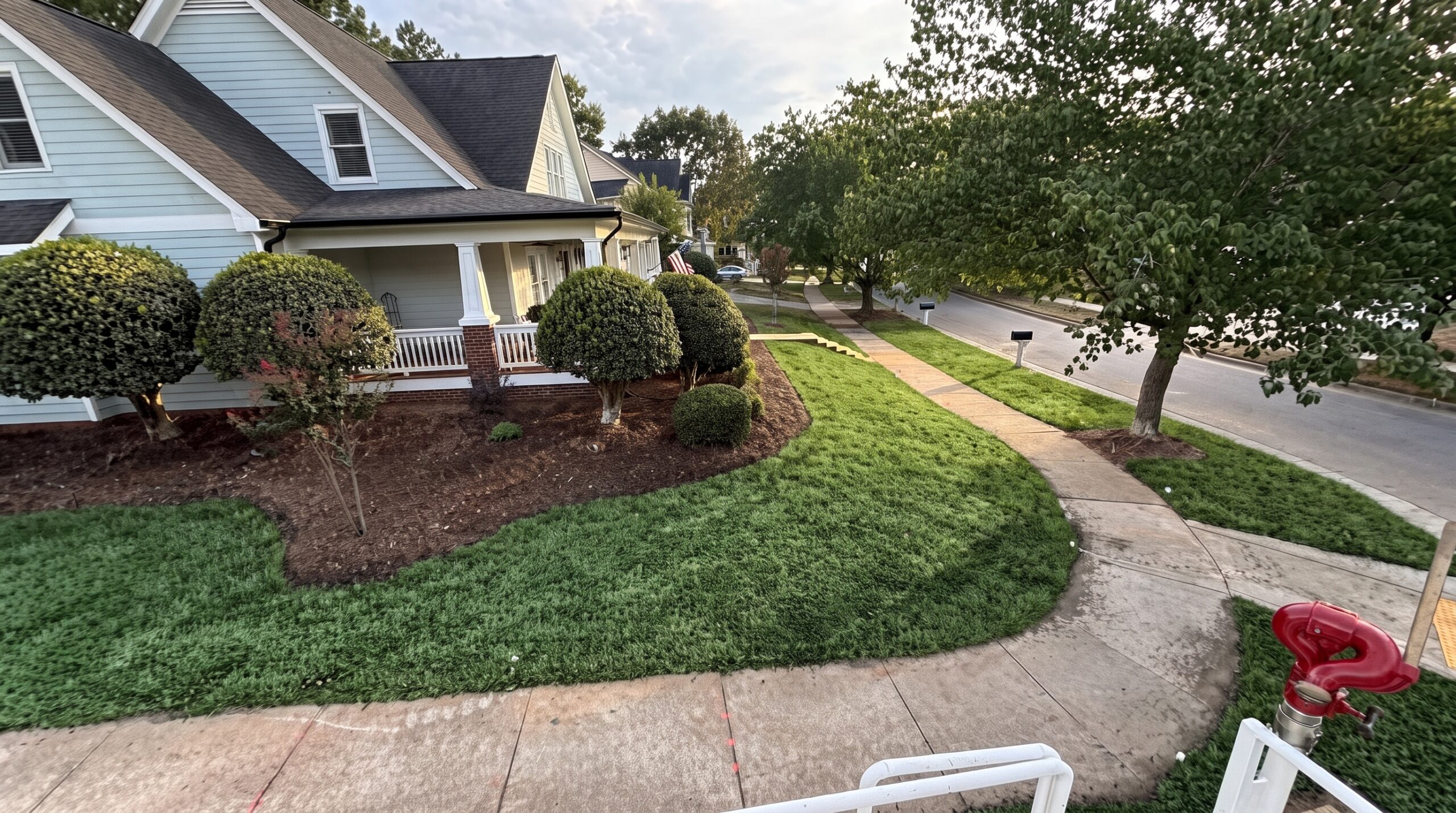
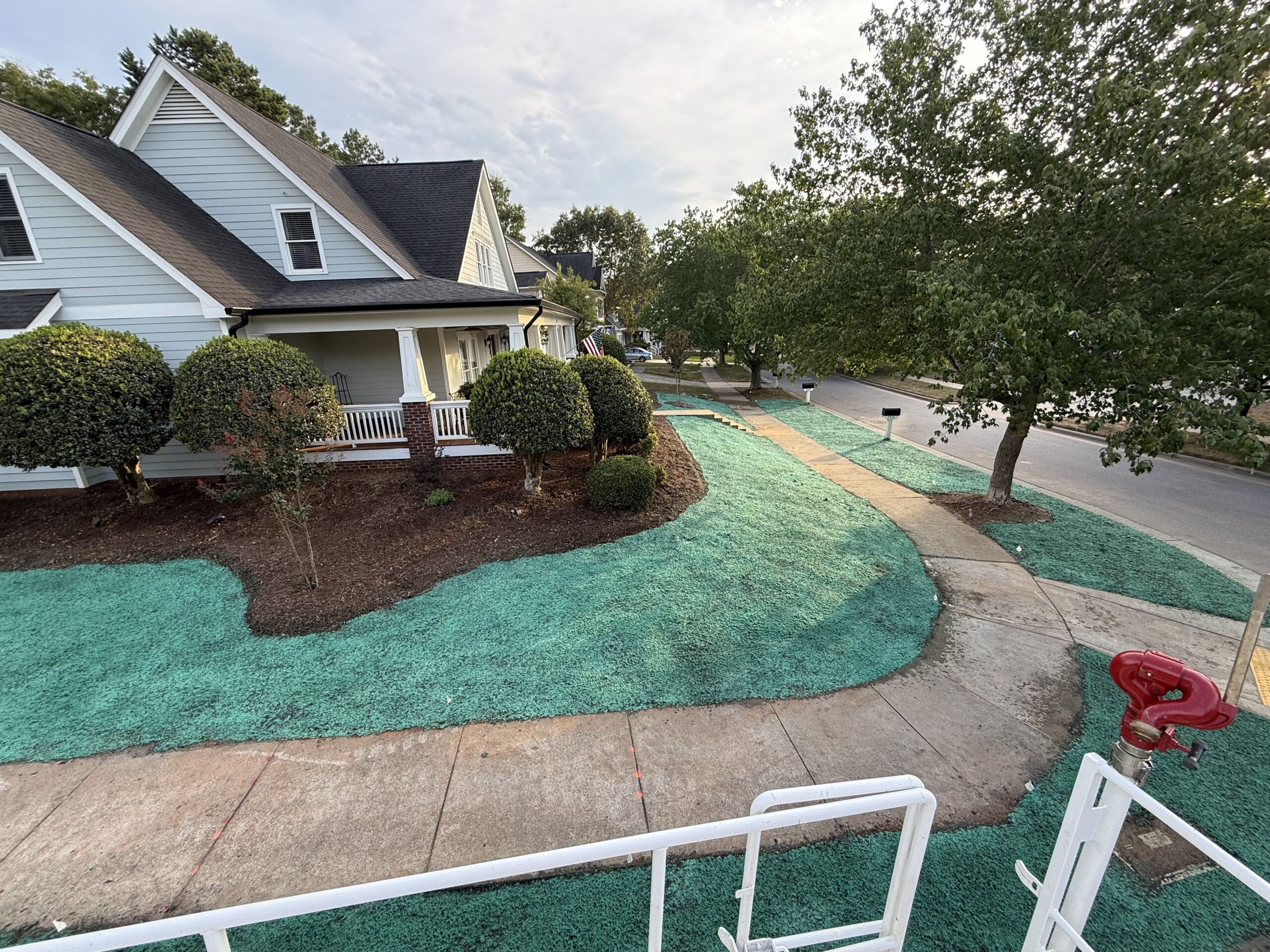 BeforeAfter — day 60
Hydroseeding vs sod vs hand seeding
On Georgeville and Badin slate belt silt loams, shifting to Triassic material near Moncure, broadcast seed struggles and sod gets expensive fast. Hydroseeding sits between them.
| Hydroseeding | Sod | Hand seeding | |
|---|---|---|---|
| Cost per sq ft | $0.08 – $0.20 | $0.60 – $1.50 | $0.04 – $0.10 |
| Seed-to-soil contact | Excellent — mulch and tackifier hold seed in place | N/A — pre-grown | Poor on compacted ground; seed moves to low spots |
| Slopes and banks | Sprays anywhere a hose reaches | Slips before rooting; needs staking | Washes out in the first heavy rain |
| Grass choice | Any blend, matched to soil and light | Limited to what the farm grows | Any blend |
| Usable lawn | One growing season | 2–3 weeks | One to two seasons, patchy |
What we hydroseed in Chatham County
Residential, agricultural and commercial work throughout Chatham County.
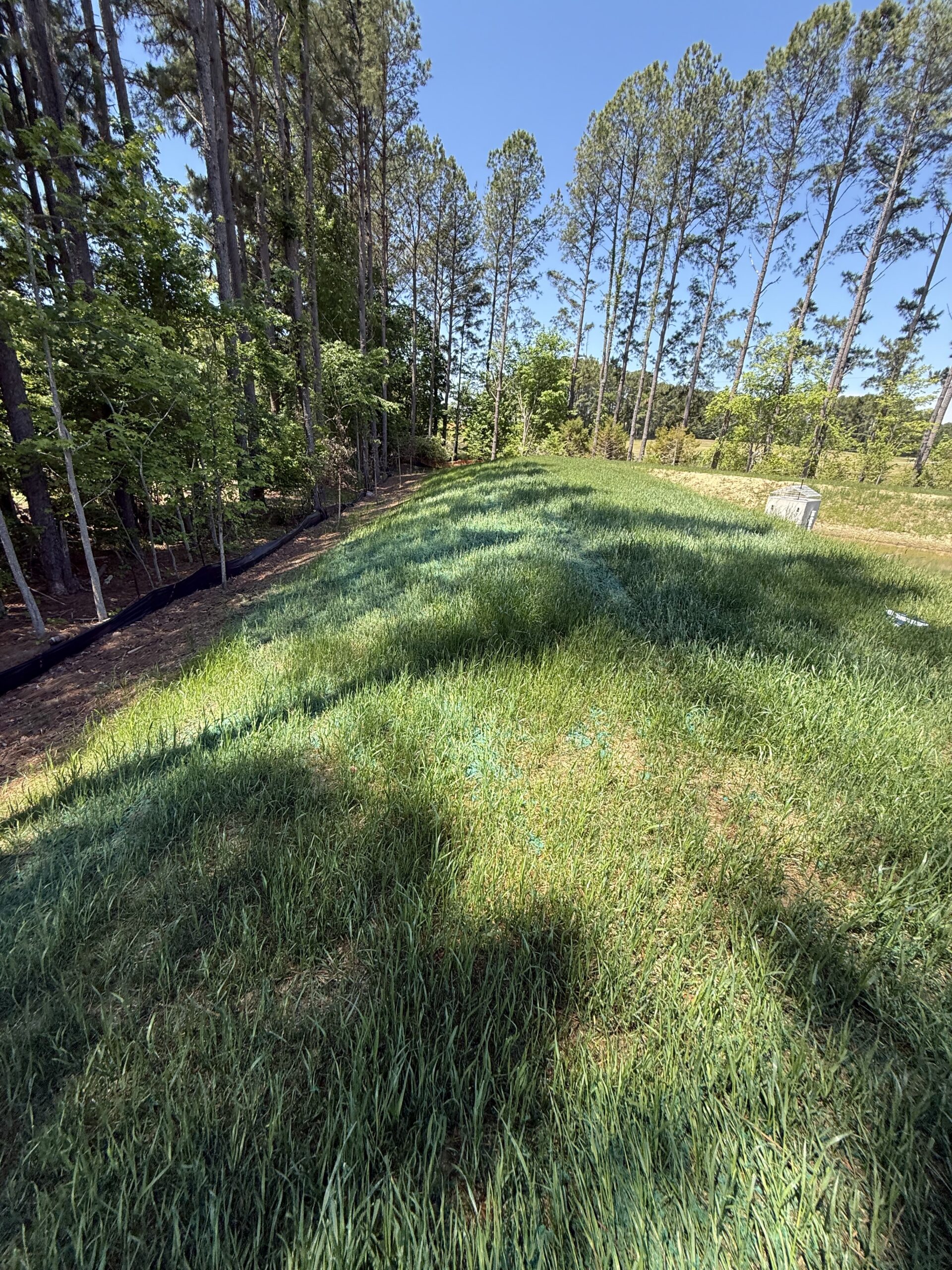
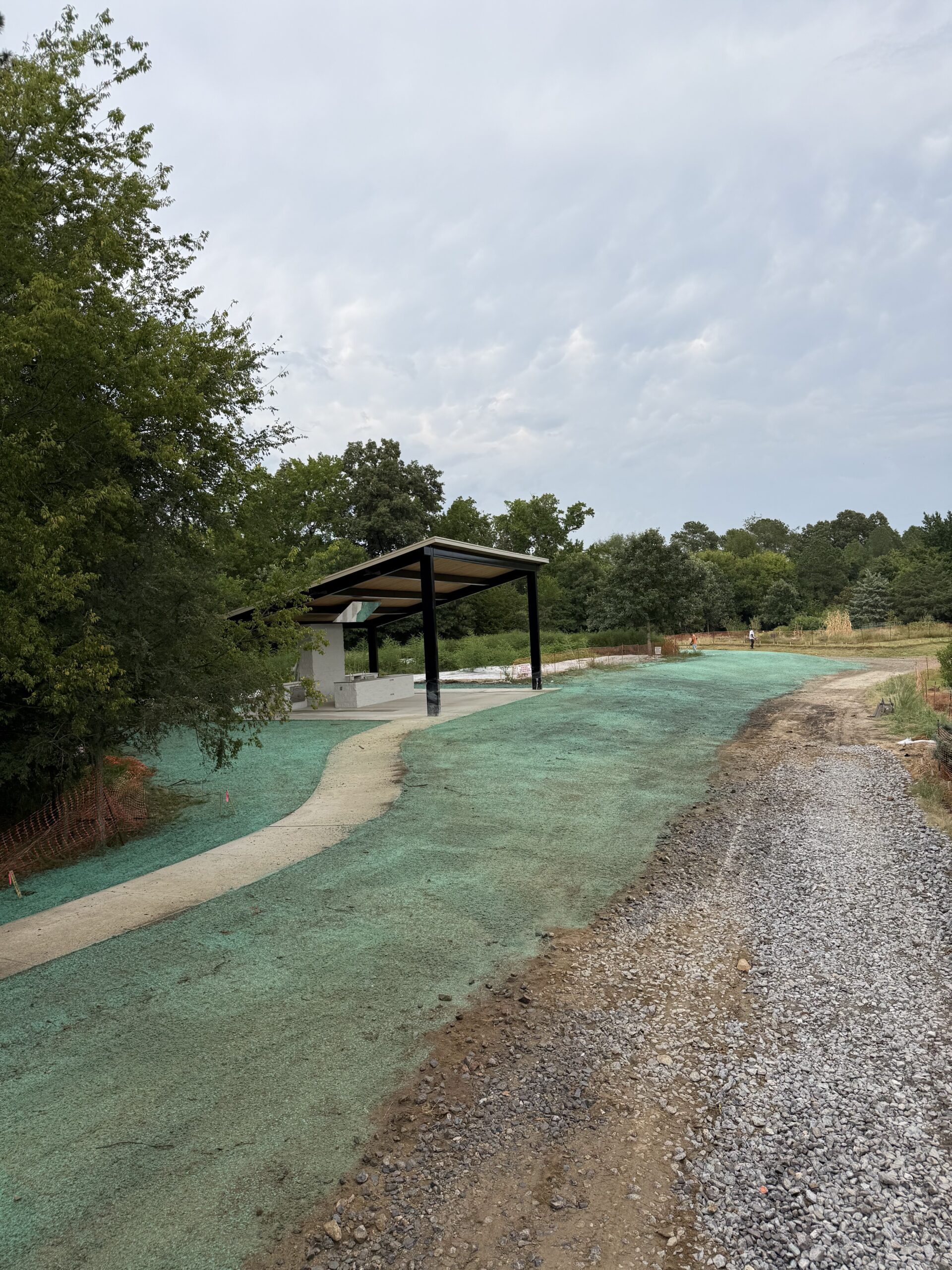
Erosion control
The largest part of our Chatham work. Slopes draining toward Jordan Lake, Deep and Haw River banks, and cut slopes on hillside building sites. Bonded fiber matrix for anything steep or close to water.
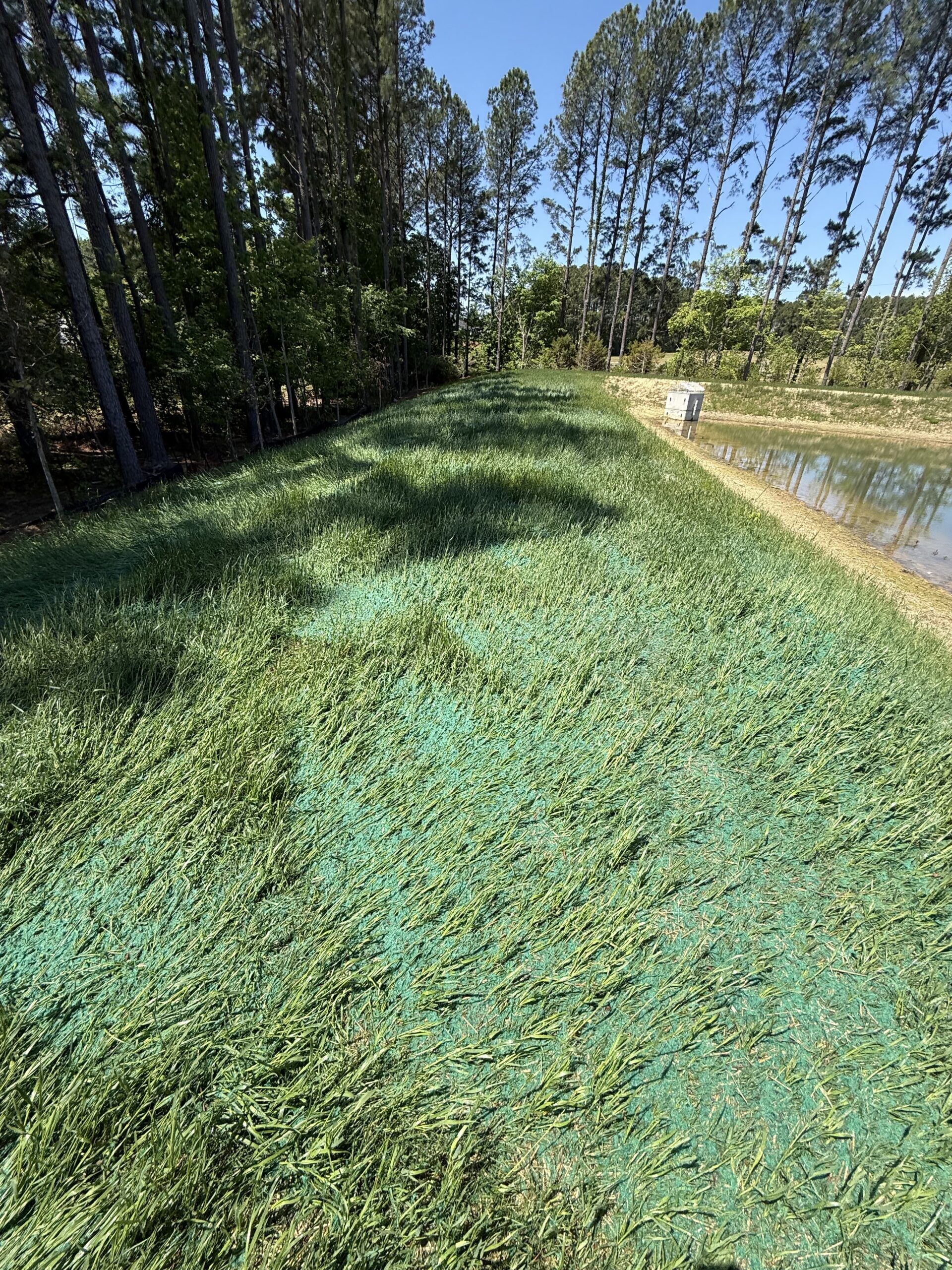
New lawn installation
Lawns on the new development around Pittsboro and Briar Chapel, plus homes on acreage across the rural county. Slate belt silt seeds well once the crust is broken.
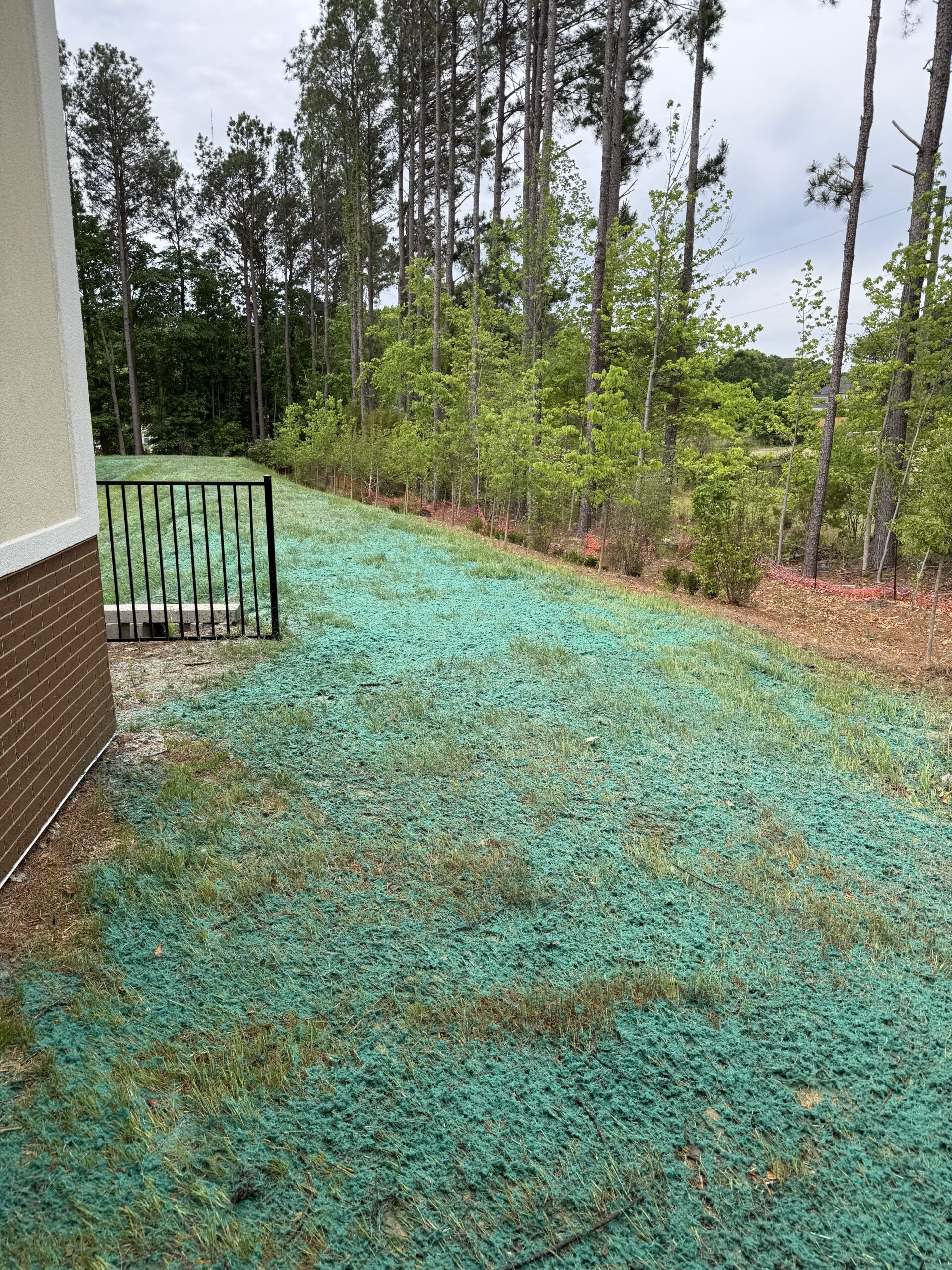
Builders & commercial
Master-planned development, the industrial sites going in near Siler City, and utility corridors. Permanent seeding to the approved plan, with documentation for Chatham County sign-off.
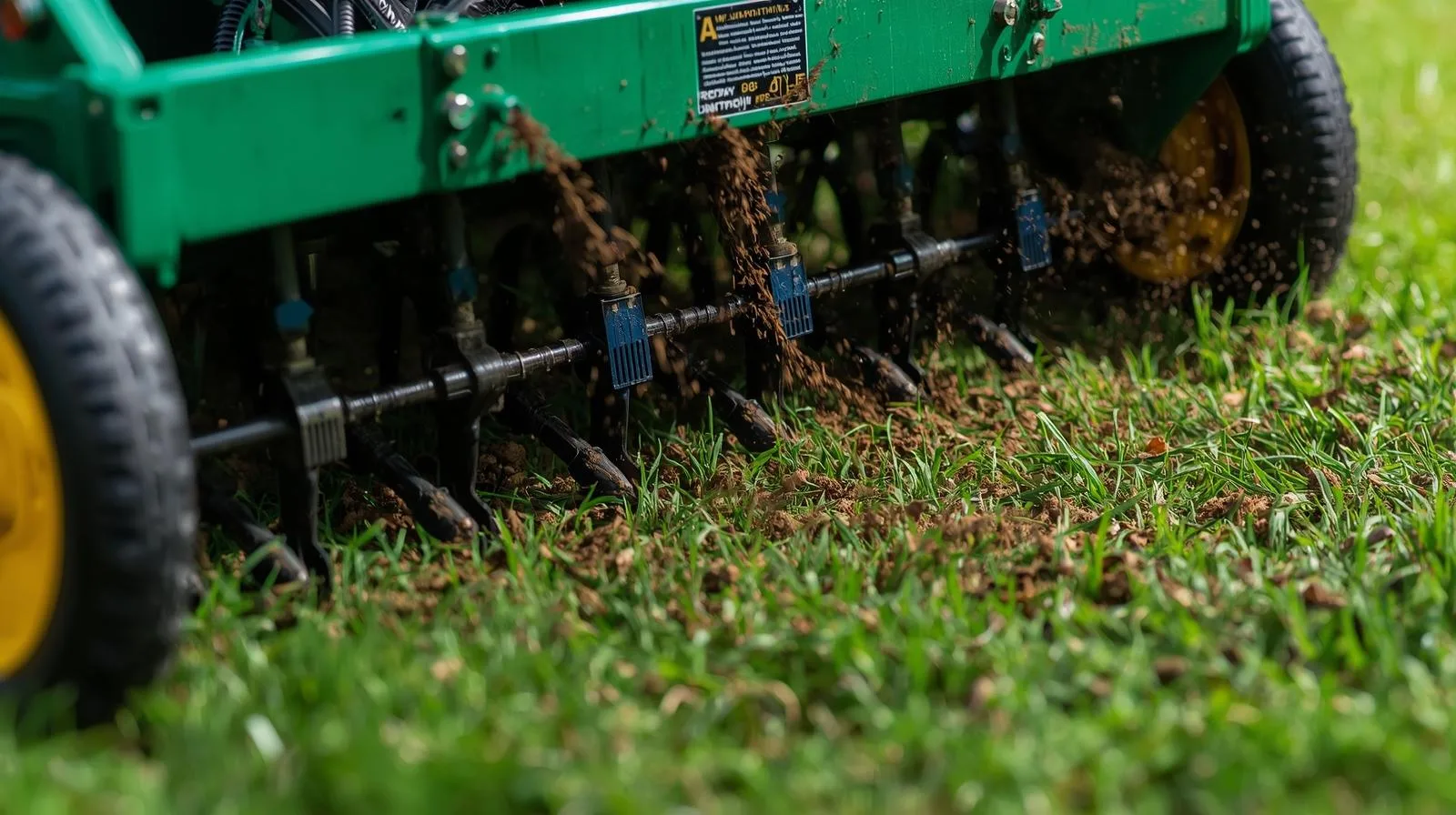
Lawn renovation & overseeding
Overseeding established lawns, and seeding over new septic drain fields where the ground is disturbed but you cannot bring heavy equipment across it.
How a job runs
Most residential properties are sprayed in a single morning. Larger acreage takes a day or two.
- 01
On-site estimate
We measure the area, check drainage and light, and talk through which blend fits Georgeville and Badin slate belt silt loams, shifting to Triassic material near Moncure. Written price the same day, no charge.
- 02
Soil prep
Rough grading, rock and debris removal, and breaking the compaction left by construction or years of mowing. Amendments follow the soil test.
- 03
The spray
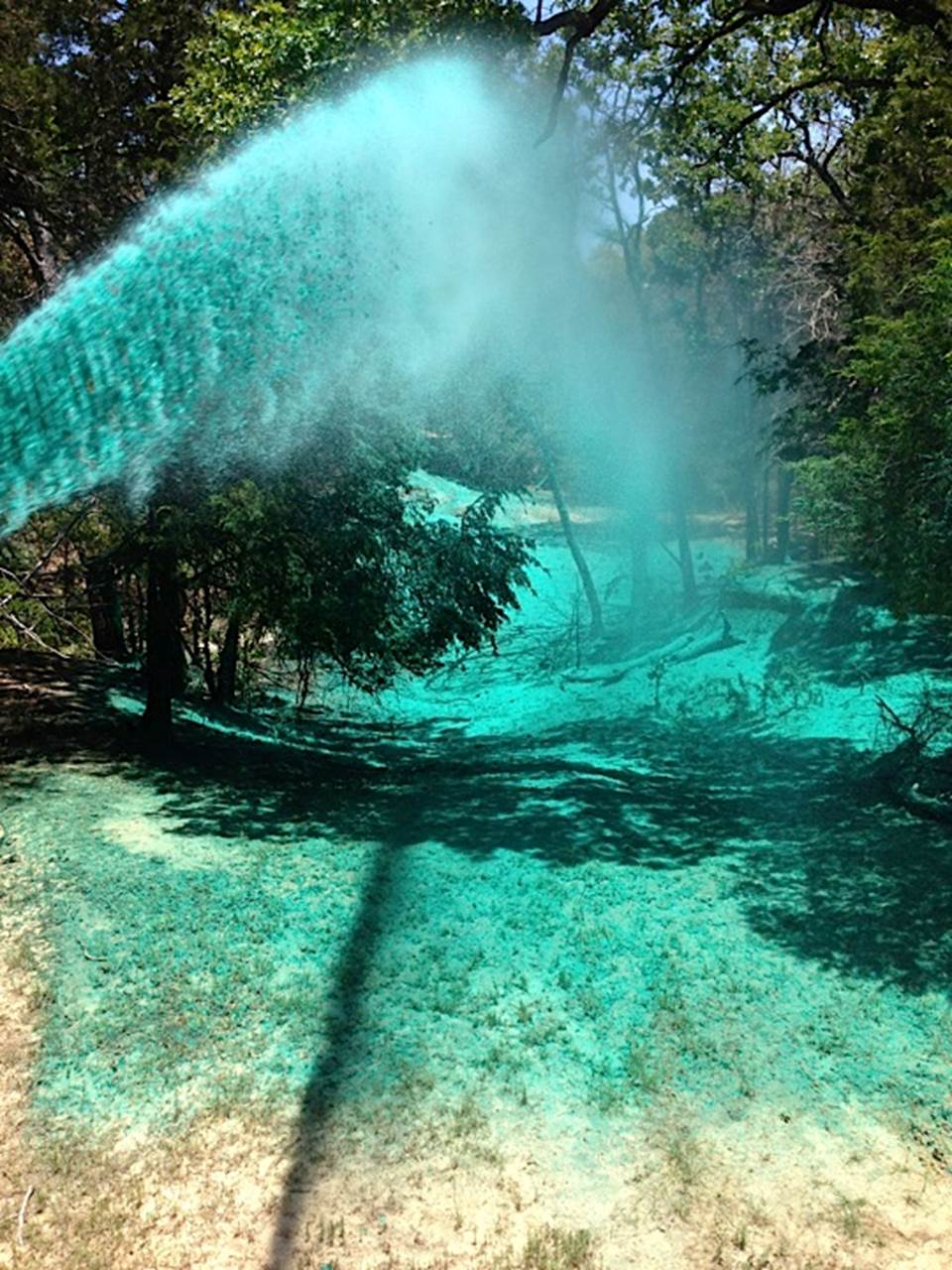
Seed, mulch, starter fertilizer and tackifier mixed in the tank and sprayed in an even coat. The green dye shows exactly what's been covered.
- 04
Your watering window
The first three weeks decide the outcome. We leave a simple schedule — short frequent cycles, tapering as roots go down.
- 05
Follow-up
We check back after germination and touch up anything that thinned from a washout or heavy traffic.
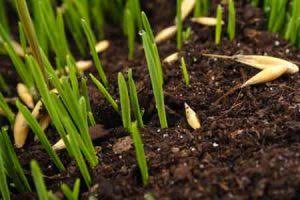
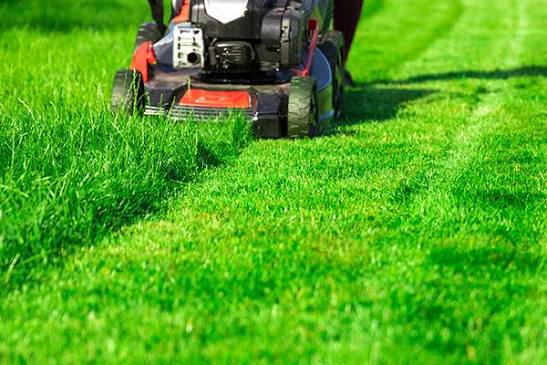
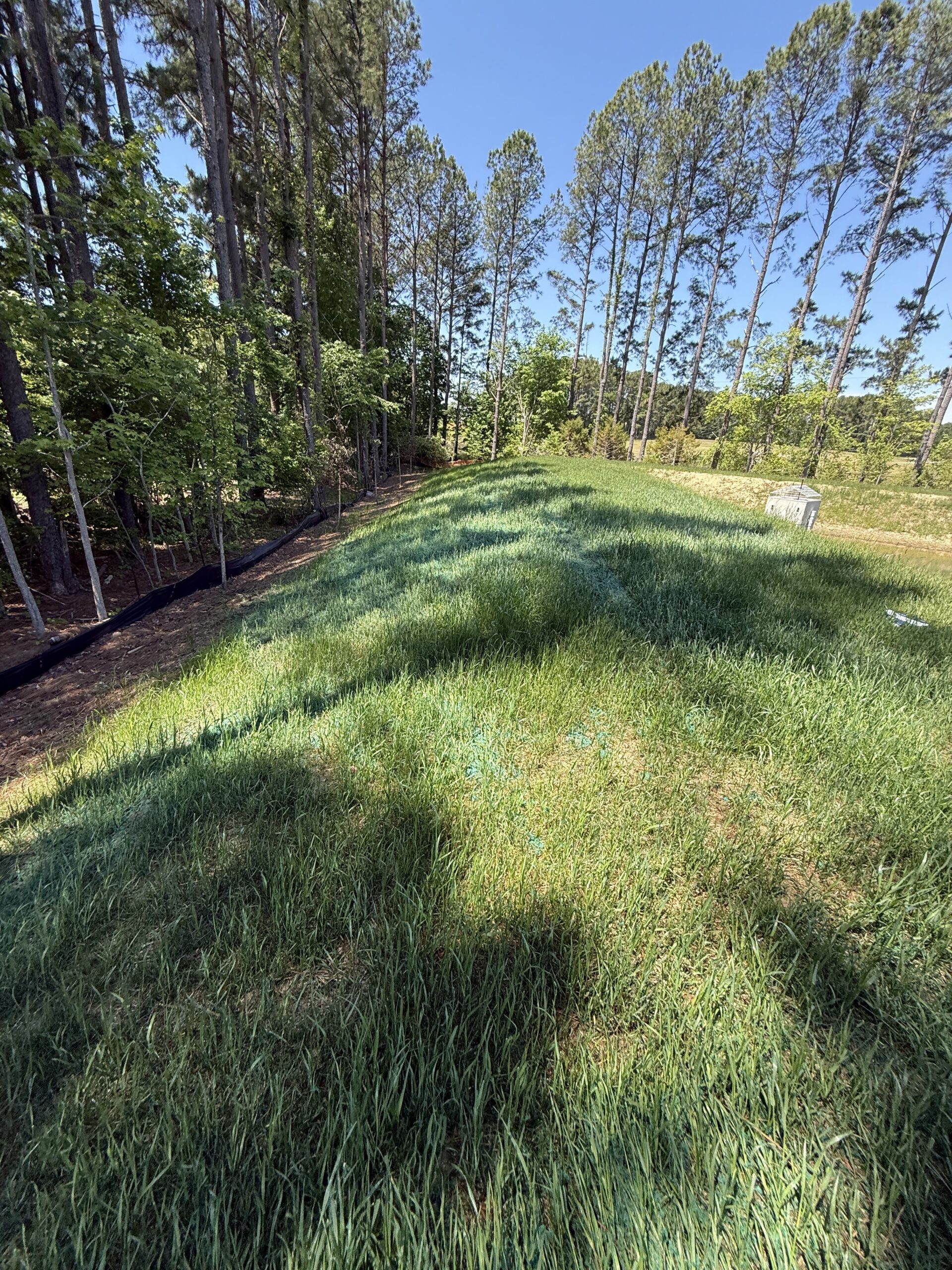
From tank to turf
The same job at every stage, so you know what to expect week by week.
Hydroseeding near you in Chatham County
We cover the whole county. If your area isn’t listed, call — we travel for larger jobs.
- Pittsboro
- Siler City
- Goldston
- Bear Creek
- Bynum
- Moncure
- Bonlee
- Briar Chapel
- Governors Club
- Silk Hope
- Fearrington
Based in Raleigh and working throughout Chatham County, NC.
Next door: we also cover Orange County, Durham County, Alamance County, Wake County.
Looking for the city specifically? See our Raleigh hydroseeding page.
What Chatham County customers say
Building site sloped straight toward the lake and the inspector was not happy. Sprayed within two days of the call and it passed.
Greg N. — Pittsboro
New drain field left a scar across the yard. They seeded it without driving anything over it and it blended back in.
Rachel A. — Silk Hope
Steep bank on the Deep River had been washing for years. Heavy matrix, and it has held two winters.
Lonnie C. — Moncure
Hydroseeding questions we get in Chatham County
Do Jordan Lake Rules affect hydroseeding in Chatham County?
They shape it. The Jordan Lake nutrient management rules apply countywide, which for residential lawns means a reduced-phosphorus starter fertilizer rather than a permit. On any site with a land disturbance permit, establishing permanent vegetative cover is already a condition of your approved plan, and hydroseeding is an accepted method for meeting it.
Can you seed over a new septic drain field?
Yes, and it is a common Chatham job. A drain field cannot take heavy equipment or deep tillage, which rules out most seeding methods. A hydroseeder sprays from the hose with nothing crossing the field, so we can establish cover over the disturbed ground without risking the system.
How fast can you get cover on a site the inspector has flagged?
Usually within a few days of the call, and the spray itself takes a morning on most sites. If the ground is bare and a storm is coming, tell us that when you call — we prioritise sites at genuine risk of sediment loss over routine lawn work.
How much does hydroseeding cost in Chatham County?
Our residential rate here is $0.08 to $0.20 per square foot. Chatham properties are often large and sloped, so most residential jobs land between $1,200 and $3,500 and larger sites price per acre. What moves the number is how much prep Georgeville and Badin slate belt silt loams, shifting to Triassic material near Moncure needs, plus slope and truck access. Every estimate is free and measured on site.
How long does hydroseed take to grow in Chatham County?
Expect germination inside two weeks on Georgeville and Badin slate belt silt loams, shifting to Triassic material near Moncure. You’ll see a thin green haze first, a first mowing around week four to six, and a lawn that reads as filled in after one full growing season.
When is the best time to hydroseed in Chatham County?
The fall window — mid-September to late October — is best, and we use tall fescue on lawns, with fast-establishing nurse crops on erosion work. March into early April is the fallback. Locally, erosion work runs year round here regardless of turf timing, because bare ground draining to Jordan Lake will not wait for September. Warm-season grasses go down May through July, and erosion work runs year round using cover crops when turf timing is wrong.
Is hydroseeding better than sod?
If you can wait one season, hydroseeding is usually the better value. Sod suits urgent timelines. It costs roughly a third as much, and the grass roots into your own soil rather than a farm’s, which matters on Georgeville and Badin slate belt silt loams, shifting to Triassic material near Moncure. It also reaches slopes a sod crew would struggle to hold.
How often do I water new hydroseed?
Damp, never soaked — that’s the whole rule. Two to three short cycles a day for the first two to three weeks, then once daily, then deep watering twice a week once the grass is a couple of inches tall. On Georgeville and Badin slate belt silt loams, shifting to Triassic material near Moncure the risk is usually over-watering into runoff rather than under-watering, so short cycles beat long ones. We leave a printed schedule.
Do you offer hydroseeding near me in Chatham County?
Yes. Pittsboro, Siler City, Goldston, Bear Creek, Bynum, Moncure, Bonlee, Briar Chapel and the surrounding areas are all in our regular route. Call (919) 555-0148 with your address and we’ll confirm the same day.
Free estimate in Chatham County
Tell us where the property is and roughly how big. We’ll come measure it and send a written price — usually within two business days.
- Call
- (919) 555-0148
- [email protected]
- Serving
- Chatham County, NC and the greater Triangle
Based in Raleigh, NC - Hours
- Mon–Fri 7:00am–6:00pm
Sat 8:00am–2:00pm
Hydroseeding Raleigh NC is proudly powered by WordPress