Drainage fields in Raleigh & the Triangle
French drains, curtain drains, swales and downspout tie-ins for yards that hold water. Red clay doesn’t drain, so on most Triangle lots the water has to be given somewhere to go.
- French, curtain and channel drains
- Regrading and swales
- Disturbed ground reseeded when we're done
Get a free estimate
Tell us what the site needs and roughly how big it is. We’ll measure it and send a written price.
We only use your details to quote the job. No mailing lists.
Free on-site estimates throughout the Triangle.
(919) 884-9772Why your yard holds water
Piedmont clay has very low permeability. Rain that would soak into sandy soil in minutes sits on clay for days, and on a graded construction lot the problem is worse because the equipment compacted whatever structure the soil had left.
Seeding into standing water is wasted money — the seed rots. Drainage has to come first. Depending on what’s happening we’ll pipe it out with a French or curtain drain, reshape the surface with a swale, tie downspouts into a solid line away from the foundation, or some combination. Then we seed the scar so the yard recovers.
What's included
What you’re actually paying for, itemised.
French drains
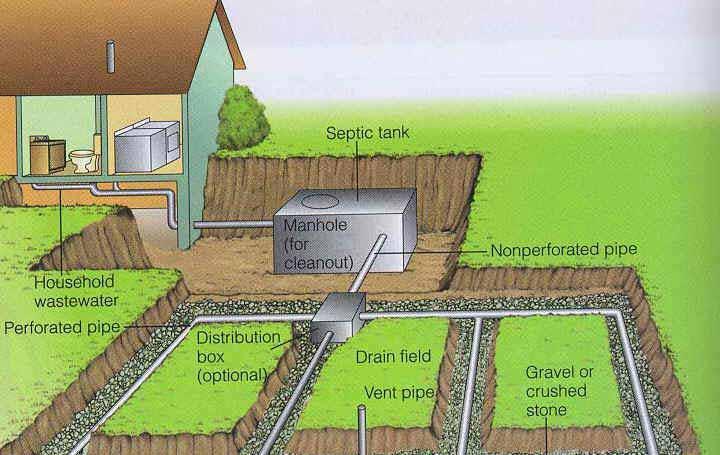
Perforated pipe in clean stone wrapped in filter fabric, collecting subsurface water and carrying it to a daylight outlet.
Curtain drains
Intercepting water moving downhill before it reaches the yard or the foundation. Often the fix when the problem originates uphill.
Swales and regrading
Shaping the surface so water moves where you want rather than pooling. Sometimes the whole answer on its own.
Downspout tie-ins
Solid pipe taking roof water well away from the foundation instead of dumping it at the corner of the house.
How a drainage job runs
Start to finish, in the order it happens.
- 01
Site visit after rain if possible
Seeing where water actually sits and where it comes from beats guessing from a dry yard. We'll ask you to photograph it next time it pools.
- 02
Work out the outlet
Every drain needs somewhere to go. Finding a legal, workable daylight point is the first real constraint, and it shapes the rest of the design.
- 03
Excavate
Trench cut to fall, checked with a level as it goes. Grade is everything — a flat drain is a buried pipe full of standing water.
- 04
Pipe, stone and fabric
Perforated pipe bedded in clean stone, wrapped in filter fabric so fines don't migrate in and silt the system up.
- 05
Backfill and reseed
Trench backfilled, surface restored, and the scar hydroseeded so it doesn't wash while grass re-establishes.
Where we do this work
Raleigh and eleven surrounding counties — Wake, Durham, Orange, Chatham, Johnston, Franklin, Granville, Alamance, Person, Vance and Warren.
Questions
My yard holds water. Will seeding fix it?
No, and anyone who tells you otherwise is taking your money. Standing water rots seed. Drainage is a separate job and it has to happen first — then seeding works.
French drain or curtain drain?
A French drain collects water in the area it’s installed. A curtain drain intercepts water moving downhill before it arrives. If your problem originates uphill or next door, the curtain drain is usually the right call.
Where does the water go?
To a daylight outlet — a lower point on the property, a swale, or a legal storm connection. Finding that outlet is the first thing we work out, because without it nothing else matters.
Will it wreck my lawn?
There’s a trench scar, yes. We keep it as narrow as the job allows, backfill and restore the surface, then hydroseed the disturbed strip as part of the work. It blends back within a season.
Do I need a sump pump?
Only where there’s no gravity outlet available. Gravity is always better — nothing to fail, nothing to power. We’ll tell you honestly if your site can’t do it.
Get a free estimate
Tell us what the site needs and roughly how big it is. We’ll come measure it and send a written price — usually within two business days.
- Call
- (919) 884-9772
- [email protected]
- Address
- Raleigh, NC 27603
- Hours
- Mon–Fri 7:00am–6:00pm
Sat 8:00am–2:00pm