How a job runs, start to finish
No surprises and no vague quotes. Here is exactly what happens from the moment you call to the follow-up visit after your grass comes up — including what we need from you, and what it costs at each stage.
- Free on-site measurement
- Written price the same day
- Follow-up after germination
Get a free estimate
Tell us what the site needs and roughly how big it is. We’ll measure it and send a written price.
We only use your details to quote the job. No mailing lists.
Free on-site estimates throughout the Triangle.
(919) 884-9772The ten stages
Most residential jobs move through all of these inside about six weeks, with the spray itself taking a single morning.
- 01
You call or send the form
Tell us roughly where the property is, what the ground is doing and about how big the area is. Two minutes on the phone is usually enough for us to know whether it's a seeding job, a drainage job or both. There's no charge and no obligation from this point on.
- 02
We come and measure
Usually within two business days. We walk the site, measure the actual area you want in grass rather than the whole deed, check drainage and light, look at truck access, and dig a hole to see what the soil is doing below the surface. If you're not home that's fine, as long as we can get to the area.
- 03
You get a written price
Same day in most cases. It lists the area measured, the blend we're recommending and why, any prep the site needs, and a single total. If the site needs drainage or a wall before seeding will work, we say so here rather than after we've taken your money.
- 04
You book a date
We schedule against the weather and the season. Fall work in September and October books up first, so earlier is better. For builders we schedule against your closing calendar and spray in phases as lots come available.
- 05
Site preparation
Rough grading, rock and debris removal, and breaking the compaction left by construction equipment or decades of mowing. Where a soil test calls for it we add lime or compost. On permitted sites, silt fence and inlet protection go in before anything else.
- 06
The spray
Seed, mulch, starter fertilizer and tackifier are mixed in the tank and sprayed in an even coat through a hose. The green dye is there so the operator can see exactly what's covered — it has nothing to do with growing and fades within a couple of weeks. Most residential lots take a single morning.
- 07
Your watering window
The first three weeks decide the outcome, and this part is on you. We leave a printed schedule: short frequent cycles to keep the mulch damp, never soaked, tapering as roots go down. This is the single biggest variable in how your lawn turns out.
- 08
Germination and first mow
A thin green haze at 7 to 14 days. Don't panic if it looks sparse — it fills in. First mow around week four to six once the grass is three to four inches, taking no more than a third of the blade with a sharp mower.
- 09
Our follow-up visit
We come back after germination to look at the result. Thin spots from a washout, a dog run or uneven sprinkler coverage get touched up. What we can't fix is a lawn that wasn't watered, which is why the schedule matters.
- 10
One season on
By the end of the first full growing season the lawn reads as finished. From there it's a normal fescue programme — and if you're in the Falls Lake or Jordan Lake watershed, worth checking the nutrient limits before you buy a bag of anything.
What we need from you
Three things. That’s the whole list.
Access
Gate codes, dogs put away, and a route the truck can reach. We run a lot of hose but there's a limit.
Water
A working outdoor tap or irrigation, and someone willing to run it on the schedule for three weeks. This is the one that decides your result.
Patience
Three weeks off the grass entirely, then light traffic only until after the second mow. Roots need to knit before it takes use.
What it looks like along the way
Same job, three points in the timeline.
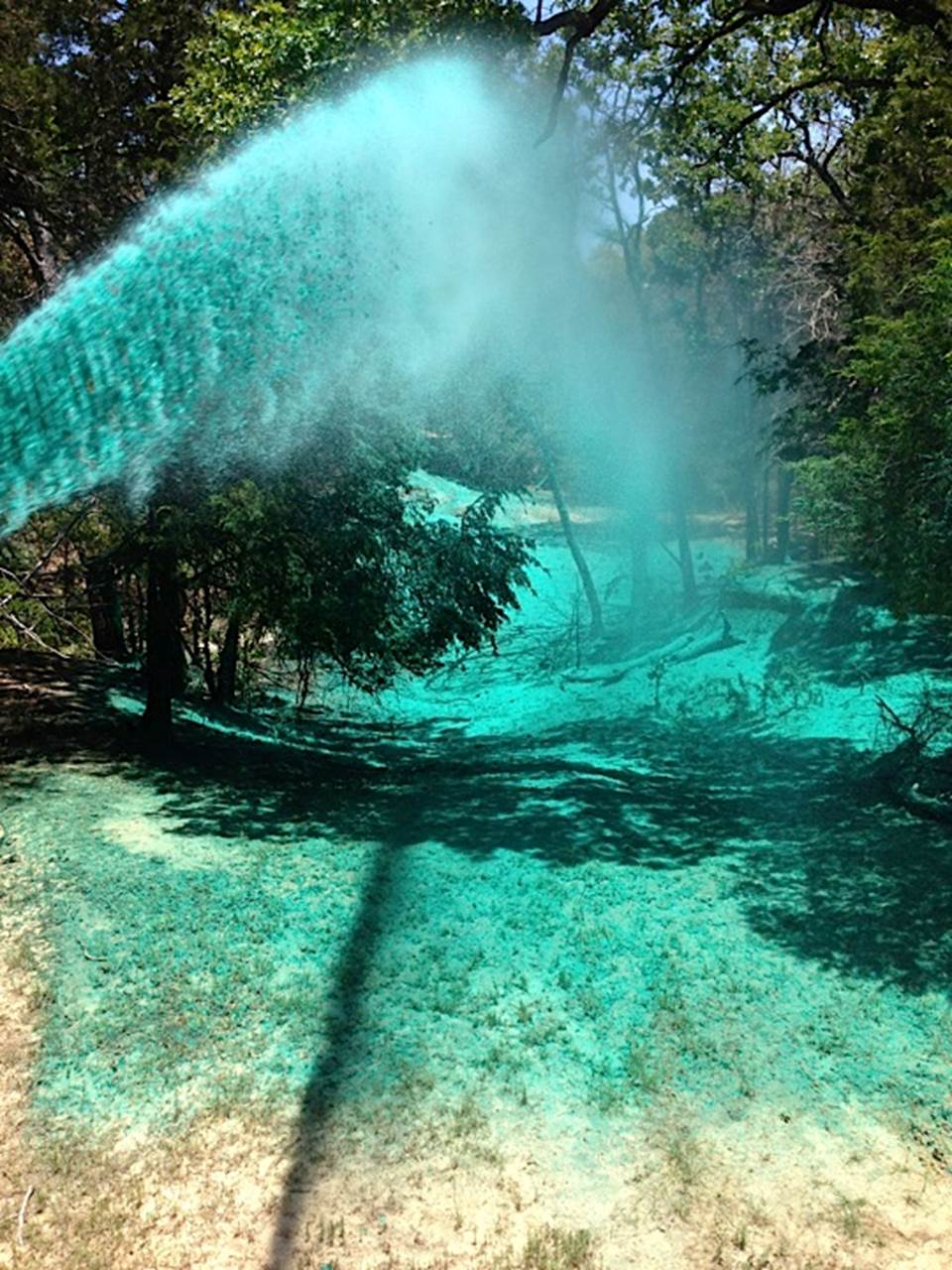
Day one — the spray
An even green coat over prepared ground.

Day 14 — germination
Thin green haze. It fills in from here.
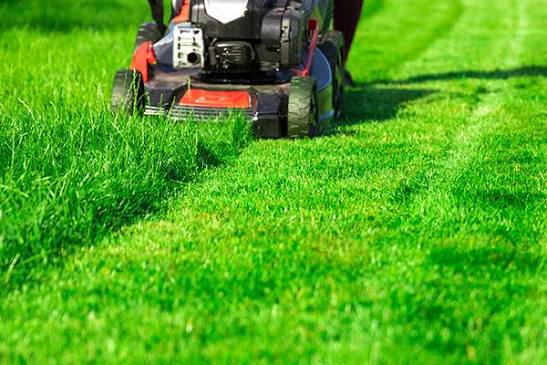
Day 35 — first mow
Three to four inches and ready for a sharp blade.
Questions about the process
How long does the whole process take?
From your first call to a lawn that looks finished, one growing season. From the call to the spray itself is usually two to three weeks depending on the time of year, and the spray takes a morning.
What if the weather turns on the day?
Light rain is fine and actually helps. Heavy storms or saturated ground push the job — we’d rather move you a few days than spray into mud and have it wash.
Do I need to be home?
Not for the estimate or the spray, as long as we can access the area and there’s water available. We’ll call before and after either way.
What happens if it doesn't come up?
We come back. Our follow-up visit exists for exactly this, and thin spots from washouts or coverage get touched up at no charge. The one thing we can’t fix is a lawn that wasn’t watered, which is why we leave a schedule and talk it through.
Can you work around a builder's schedule?
Yes — a large share of our work is per-lot builder spraying scheduled against closing dates. Send the plat and target dates and we’ll phase it.
Ready to start?
Call or send the form and we’ll get you booked for a free on-site measurement.
- Call
- (919) 884-9772
- [email protected]
- Address
- Raleigh, NC 27603
- Hours
- Mon–Fri 7:00am–6:00pm
Sat 8:00am–2:00pm